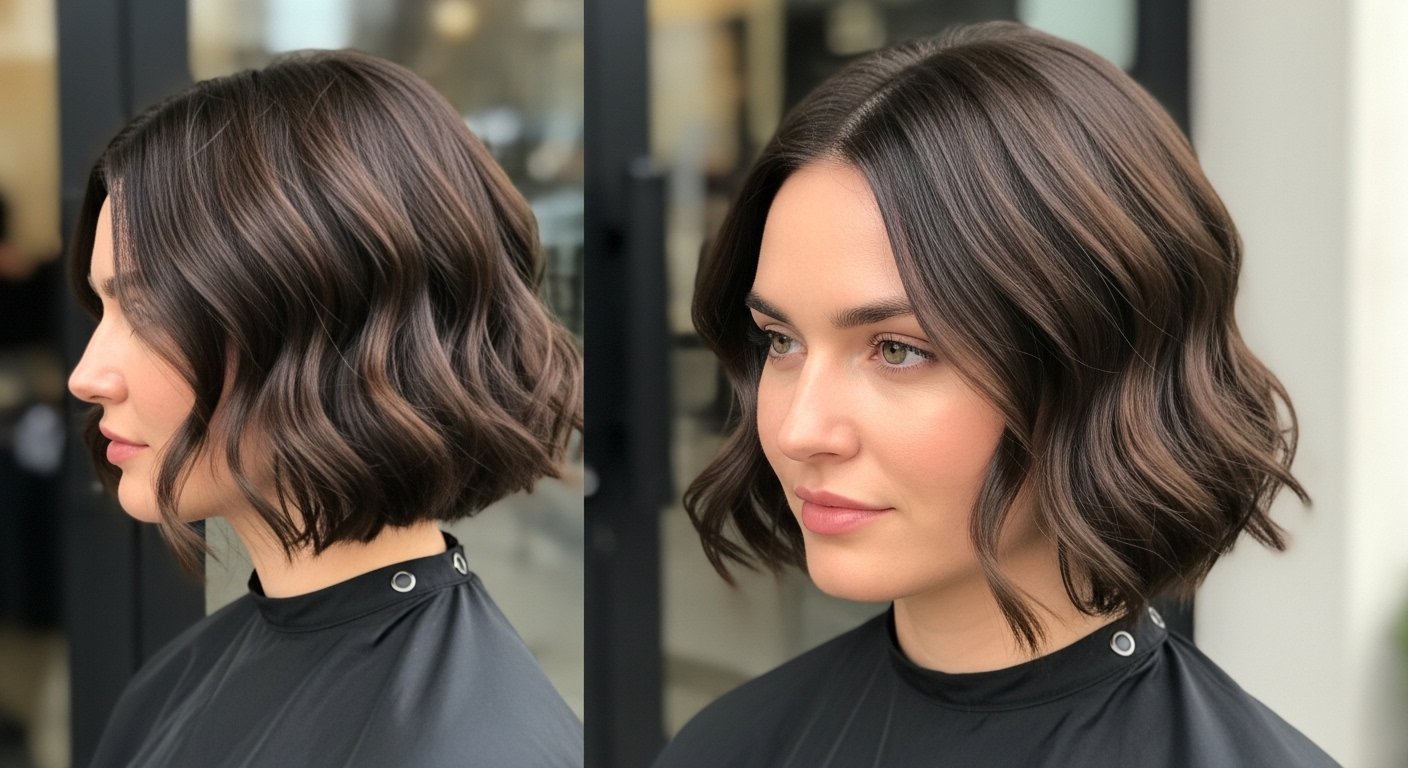
I hate when short hair looks like a helmet.
The curls are too tight or fall flat by lunchtime.
I stopped copying photo-perfect styles that don't behave on real hair.
I usually have flat roots and uneven layers, so I focus on shape and texture, not perfect spirals. This method gives soft, loose waves that move and feel natural.
How To Curl Short Hair Into Loose Waves Without Making It Look Stiff
This is the method I use when my cut needs shape and movement—soft, loose waves that never look glued or overworked.
What You’ll Need
- 1-inch ceramic curling wand (1 inch barrel, medium heat)
- Lightweight heat protectant spray (anti-frizz, fine hair)
- Light texturizing spray (salt-free, flexible hold)
- Flexible-hold hairspray (brushable, medium control)
- Small sectioning clips (alligator clips, for short hair)
- Fine-tooth tail comb (clean parting for short styles)
- Dry shampoo for root lift (matte finish)
Step 1: Prep the hair for shape and movement
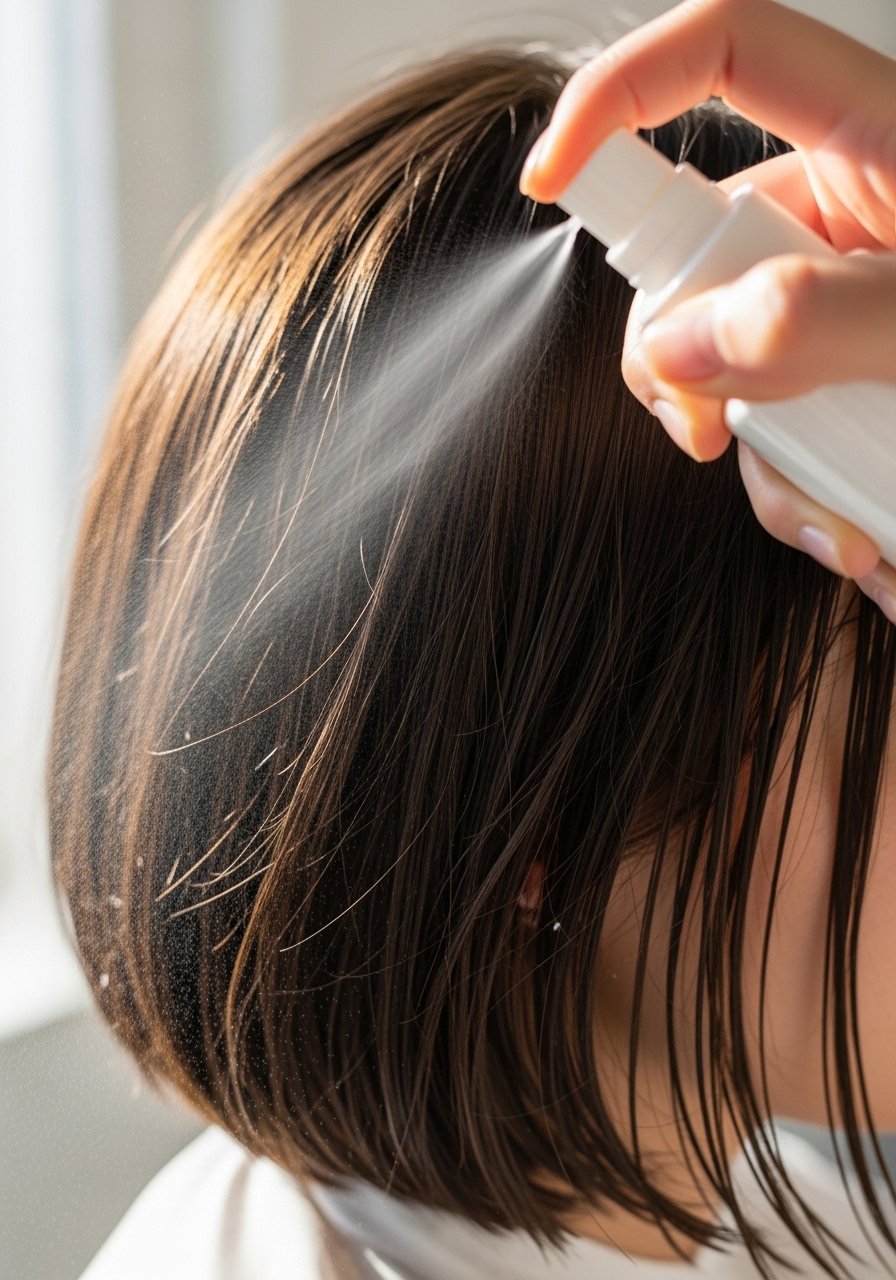
I spray a lightweight heat protectant through damp or dry hair. I do this so the hair looks smooth and the curls sit without frizz. Visually the hair gains a subtle sheen and feels slicker to the touch.
One insight I learned: protection changes how soft the wave looks once I tousle it.
Avoid over-applying product. Too much makes the curls fall heavy and limp. I use a light mist and focus on mid-lengths and ends, not the roots.
Step 2: Section for lift and balanced shape
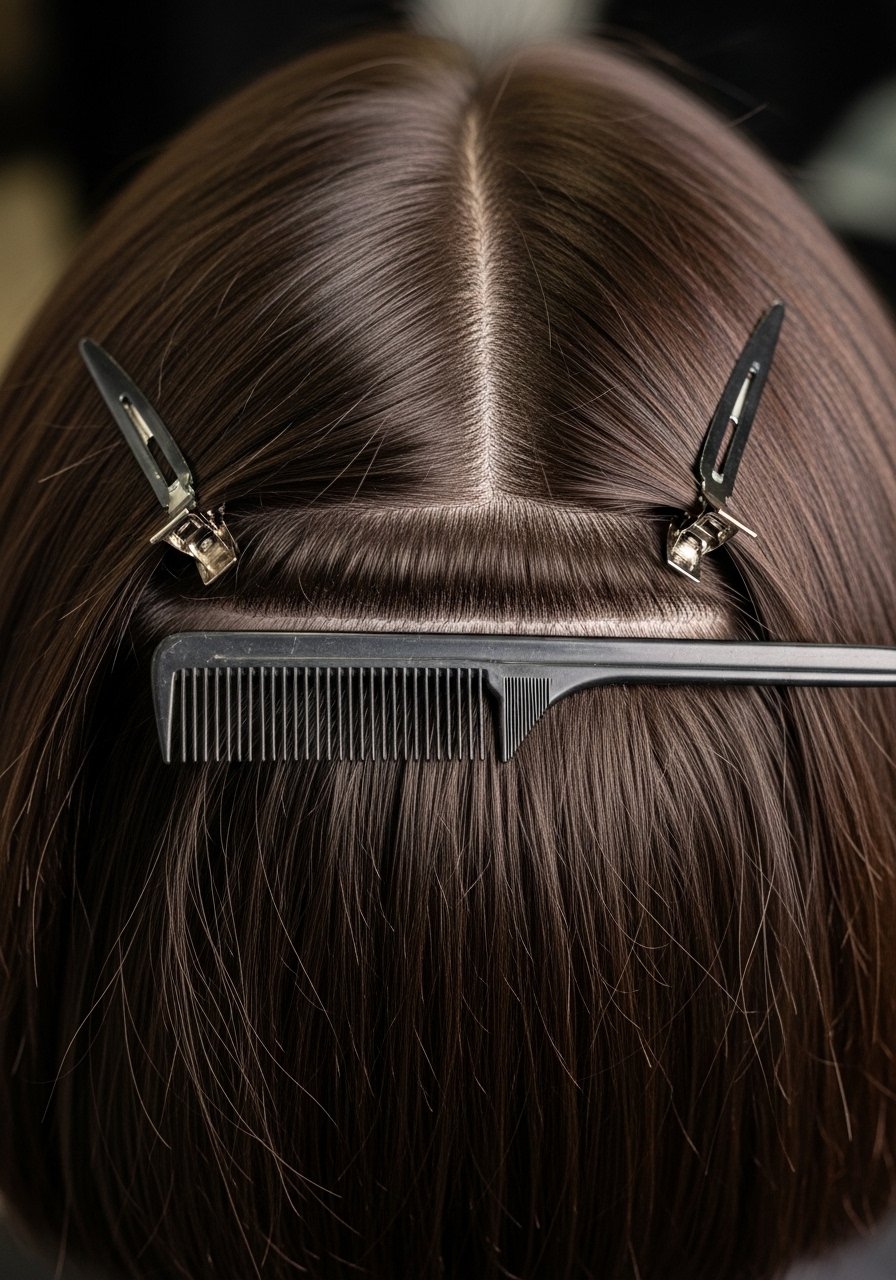
I part and clip the top half out of the way, leaving a bottom layer to work on first. This keeps the weight even and prevents the top from flattening. What changes is the visible shape: lifting the top later gives a balanced silhouette.
People miss that short hair needs smaller, thoughtful sections—not big panels.
Don’t curl too many strands at once. If I grab a thick section I lose the loose, airy look and create chunky waves.
Step 3: Curl mid-lengths, leaving ends relaxed
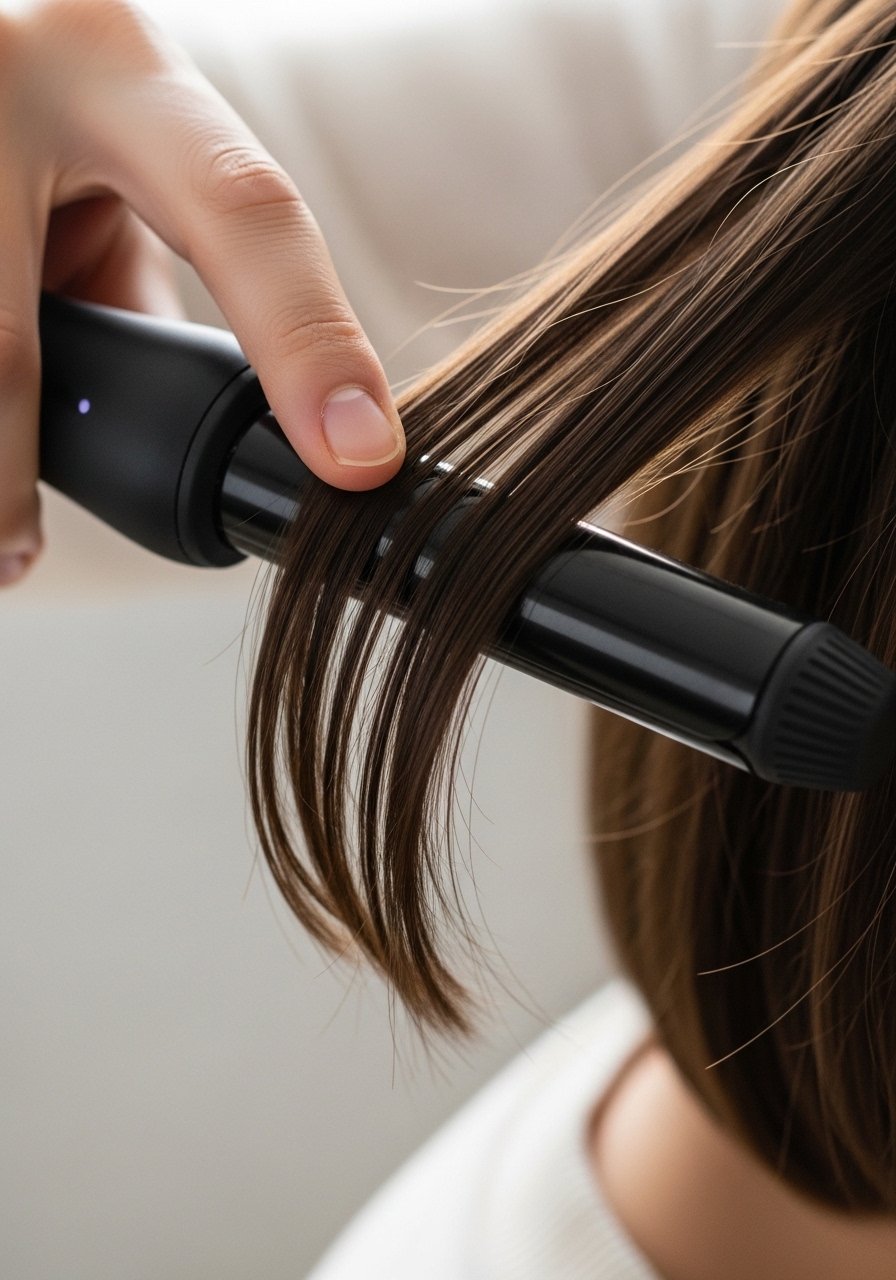
I wrap hair around the wand starting about an inch or two down from roots and stop before the ends. This creates a bend, not a spiral, so the ends stay soft. Visually the wave reads as movement, not a ringlet.
An insight: letting ends out keeps the style wearable and modern on short lengths.
Mistake to avoid: curling root-to-end. That makes short hair look like tight corkscrews and kills shape. I always start lower and keep the ends loose.
Step 4: Cool, then break the waves with fingers
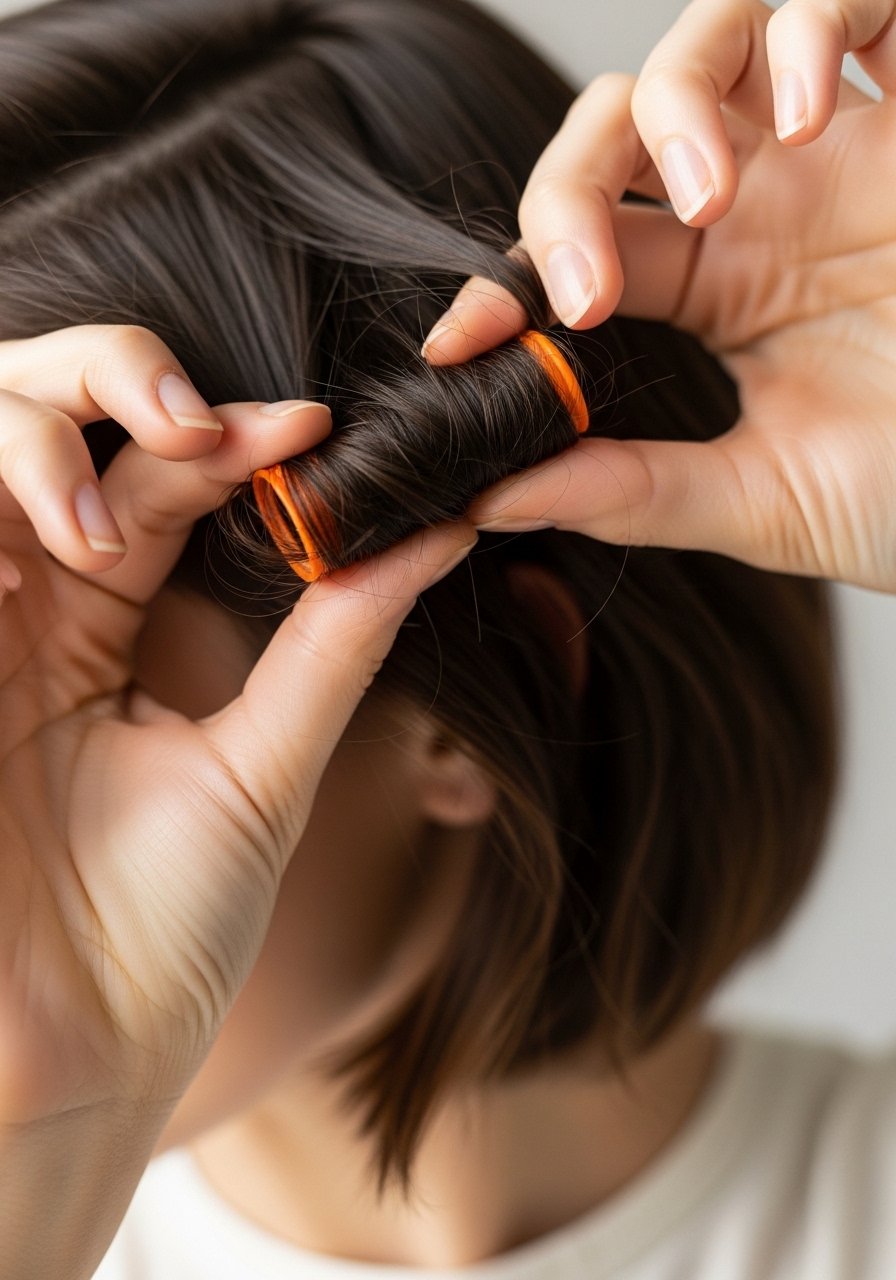
After each curl cools I cup it in my hand for a moment or clip it to set the bend. Then I run my fingers through the lengths to separate and relax the wave. You’ll see the shape soften from defined loops to airy bends.
I’ve noticed people often brush too soon; that makes things frizzy or flat.
Avoid using a brush. I gently tousle with fingers to keep the waves loose and natural.
Step 5: Add texture and finish for balance
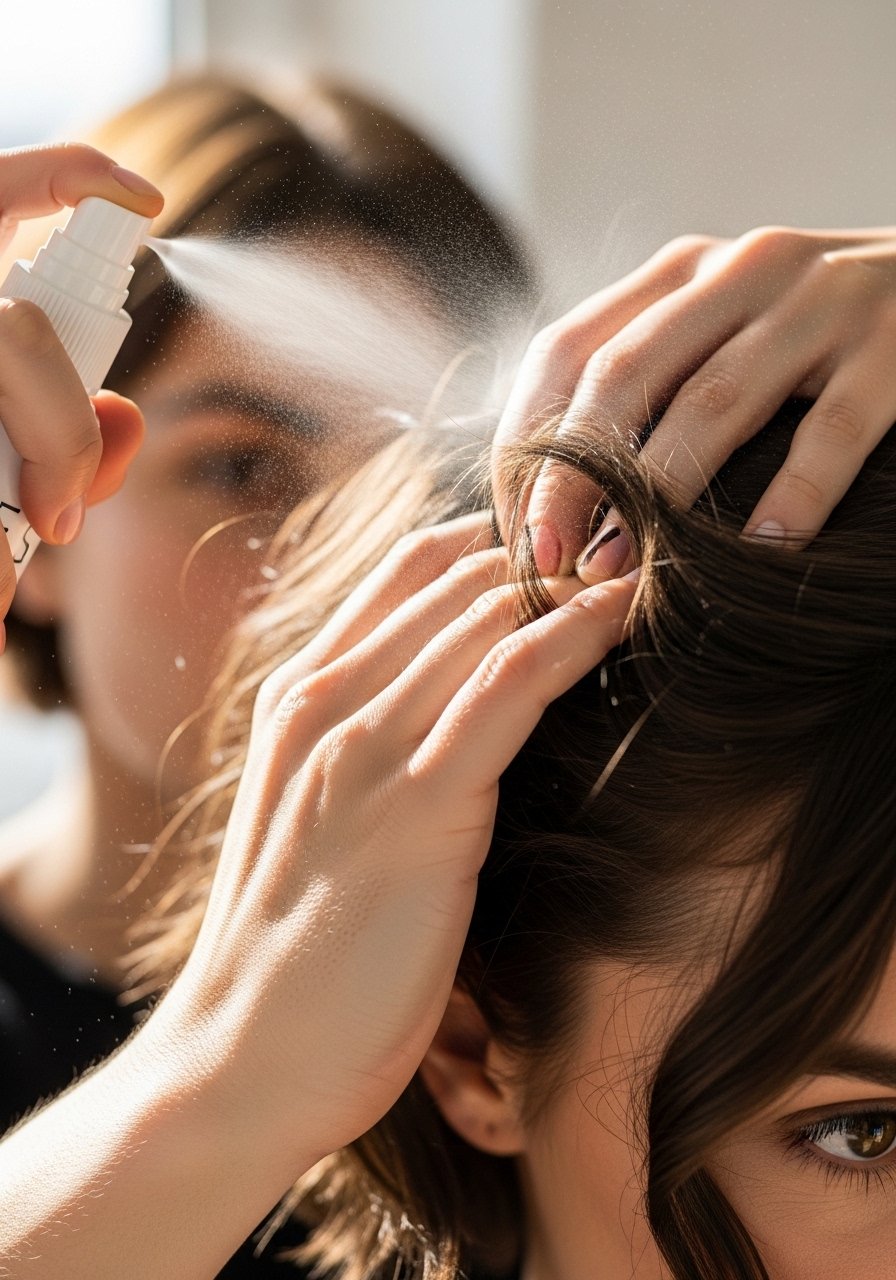
I mist a light texturizing spray through the mid-lengths for grit and movement. Then I lift the roots with fingers or a little dry shampoo if I need lift. Visually the hair goes from lifeless to airy and full.
One insight: texture is what tricks the eye into thinking there’s more shape than there is.
Avoid heavy hairspray. I use a flexible-hold spray sparingly so the waves still feel soft when I touch them.
Curl direction and section size for flattering shape
I alternate curl direction mostly away from the face for a consistent flow. On shorter hair I favor alternating just a few pieces to avoid a checkerboard look.
Section size matters: thin sections give beachy texture; slightly thicker ones give relaxed statement waves. I keep everything consistent so the silhouette reads smooth.
- Face-framing pieces: curl away from the face for a soft open look.
- Back pieces: alternate to avoid bulk on one side.
Quick fixes for stiff or limp waves
If the waves look stiff, I mist with water or a lightweight leave-in and scrunch with my hands. It immediately softens the set.
If it’s limp at the roots, a little dry shampoo at the root and a quick blast of cool air while lifting with fingers gives life back.
Sometimes a tiny dab of smoothing serum on the ends brings cohesion without weighing the hair.
Keeping waves for day two
I sleep with a loose, low headband or wrap to protect shape. In the morning I revive waves with a touch of texturizing spray and finger tousle.
I avoid re-curling everything; I refresh only the pieces that lost their bend.
A light mist of flexible-hold hairspray keeps the movement intact without that "locked" feel.
Final Thoughts
Start small and test one change—section size, product amount, or where you start the curl.
I remind myself that short hair rewards subtle, consistent choices over dramatic tricks.
If a wave looks off, finger-tousle and add a dab of texture. You’ll get a wearable, soft shape that actually behaves.
Leave a Reply